Dry, Cracked Heels in Diabetes: Why Moisturiser Isn’t Enough
Most diabetics with cracked heels treat it as a cosmetic problem. They buy a richer moisturiser, apply it more frequently, and wait for the cracks to heal. When that does not work, they switch creams. When the second cream does not work either, they assume the problem is the climate, or the season, or their age.
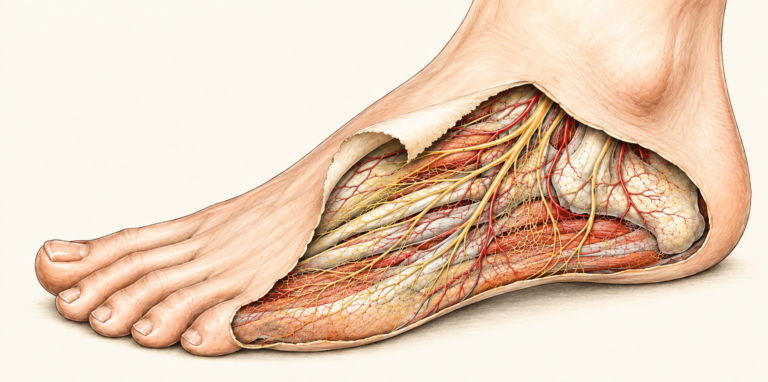
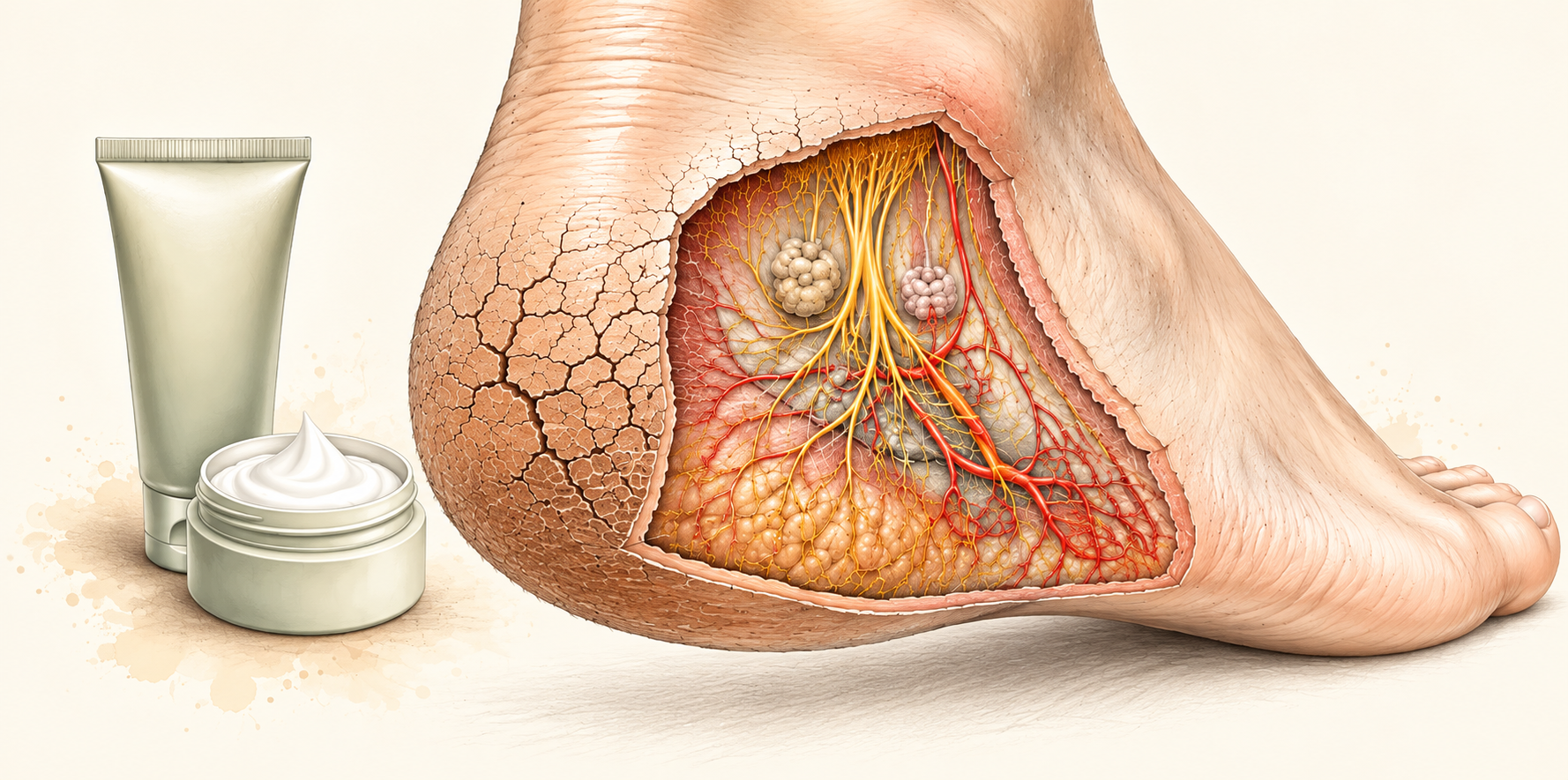
It is none of those things. Cracked heels in diabetes are not a moisturiser problem. They are a nerve problem. The dryness is a symptom of damage that is already underway inside your foot, and treating it as a cosmetic issue lets the real condition advance unchecked. Deep fissures that extend into the dermis are recognised in clinical practice as markers of autonomic neuropathy and peripheral vascular changes, not signs that you need more cream.
It is also important to understand that this is not just a heel problem. Skin changes can appear across the entire foot and, importantly, above the ankle. In fact, some of the earliest warning signs of diabetic skin and nerve damage appear before an obvious cracked heel develops. These early signs include:
- Skin that becomes shiny or takes on a glossy appearance, particularly above the ankle
- Hair loss on the lower legs and above the ankle
- Cracks and dryness across different parts of the foot, not just the heel
- Thinning skin that feels different to touch
If you notice any of these signs, the underlying nerve and vascular damage is already active, even if your heels have not yet cracked. This blog explains why diabetic feet go dry in the first place, why standard moisturisers cannot fix it, and what a clinically sound diabetic foot care routine actually looks like.
Why diabetes makes your feet dry in the first place
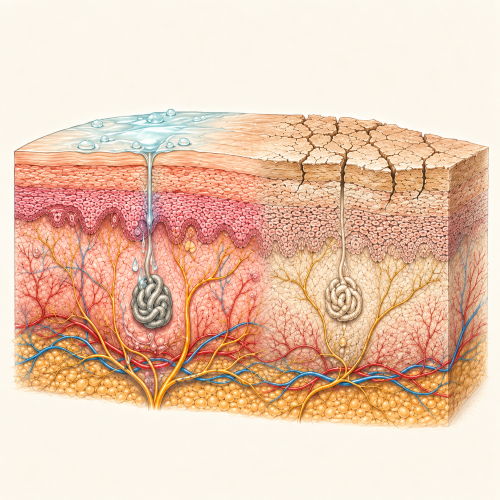
Healthy skin stays soft because tiny sweat glands across the surface of your foot release moisture continuously, and this moisture mixes with skin oils to form a thin natural barrier called the acid mantle. This barrier keeps your skin flexible, slightly acidic and resistant to small injuries.
In diabetes, that system breaks down. The autonomic nerves that control your sweat glands are among the first to be damaged by sustained high blood sugar. As these nerves stop signalling properly, the sweat glands stop producing. The skin loses its main source of natural moisture. This is not a small effect. In advanced cases the condition is called anhidrosis, which is a near complete loss of sweat in the feet.
Once sweat production fails, the skin loses its flexibility. Every step you take applies pressure to a heel that can no longer stretch and rebound. The skin cracks. Then it cracks deeper. Then it stays cracked, because the same nerve damage that caused the dryness also affects the microcirculation needed for healing.
The science of autonomic neuropathy and sweat glands
Autonomic neuropathy is the form of diabetic nerve damage that affects involuntary functions. The autonomic nervous system controls things you do not consciously command, such as heart rate, digestion, and yes, sweating in your feet. When diabetes damages these nerves through a process called sudomotor dysfunction, sweat secretion in the feet becomes impaired or stops entirely.
The same autonomic damage also disrupts the regulation of small blood vessels in the skin. Blood is shunted through arteriovenous anastomoses, bypassing the superficial capillary bed. This leads to altered skin temperature regulation. The foot may feel warmer or colder than normal, and this altered temperature perception is itself a clinical sign of autonomic dysfunction. The foot dries out from both directions, less moisture coming in and less circulatory support for the skin.
This is why diabetic skin loses its protective barrier function, which is why even a small crack can become a gateway for bacteria or fungus.
Why the heel cracks before other parts of the foot
The heel cracks first because it carries the most weight and has the thickest, least flexible skin. In a healthy person, the heel is naturally a little drier than other areas because it is the primary weight bearing surface. In a diabetic, that baseline dryness combined with loss of sweat function and reduced skin flexibility becomes catastrophic.
Every step you take compresses the heel and then releases it. Healthy skin handles this beautifully. Dry diabetic skin cannot. The compression creates micro splits along the edges of the heel pad, which deepen with each subsequent step. These are called fissures.
The danger is that a diabetic patient with sensory neuropathy may not feel the heel cracking, even when the fissure is deep enough to bleed. They learn about it only when they see the blood on their sock or notice the redness around the heel.
What separates a cosmetic crack from a clinical fissure
Not every dry heel is dangerous, but every diabetic should know the difference. Here is the clinical hierarchy from least to most serious.
- Superficial dryness: The skin looks flaky or rough but there are no visible cracks. This is the earliest stage and the easiest to address.
- Superficial fissures: Narrow cracks limited to the upper layer of skin called the epidermis. They are visible but do not bleed. They can usually be treated with proper skin care.
- Deep fissures: Cracks that extend into the dermis, the deeper skin layer. These often bleed, hurt in patients who still have sensation, and pose a genuine infection risk.
- Infected fissures: Once bacteria enter a deep fissure, the surrounding skin becomes red, warm and swollen. This is no longer a skin problem. It is the early stage of cellulitis or a diabetic foot infection.
A deep fissure is a clinical signal that both autonomic nerve damage and vascular changes are likely present. A patient with deep heel fissures should not be treating themselves with a high street cream. They should be assessed by a podiatrist.
The bleeding heel test
If your heel cracks deeply enough to bleed, if the cracks are deep enough that dust or debris collects inside them, or if the surrounding skin is warmer or colder than the rest of your foot, this is no longer a cosmetic problem. It is a clinical one. Any deep fissure that collects dirt is a wound waiting to be infected, regardless of whether it is actively bleeding.
For further information, contact FootSecure Malleswaram on 8282825510 before the fissure becomes an entry point for infection.
Why your moisturiser is probably making things worse
Most people reach for thicker, oilier creams when their heels crack. This works for non-diabetic skin. It can actively harm diabetic skin. There are three reasons.
Reason one: thick creams trap moisture in the wrong places
Heavy occlusive creams seal the skin surface. Applied between the toes, where the skin is already moist and warm, they create an environment fungus loves. Many patients who treat dry feet with thick cream develop interdigital tinea pedis, which then becomes the gateway for bacterial cellulitis. The rule is simple. Heavy cream goes on the heel and the top of the foot. Nothing goes between the toes.
Reason two: many creams contain irritants that diabetic skin cannot tolerate well
Standard pharmacy moisturisers often contain fragrances, alcohols, salicylic acid, urea in non clinical concentrations or strong exfoliants. Diabetic skin with compromised barrier function is less tolerant to these irritants. What feels mildly tingly on healthy skin can cause low grade inflammation on diabetic skin, which compounds the original dryness.
Reason three: scrubbing pumice stones can puncture the protective barrier
Many patients pair their moisturiser with a pumice stone or metal foot file to remove dead skin. On diabetic skin, this is dangerous. The patient may not feel the abrasion. They can remove not just the dead layer but the live skin beneath it, creating a wound. Patients regularly present at podiatry clinics with self inflicted wounds that started as foot care.
What actually works for diabetic dry heels
A clinically sound approach to dry diabetic heels has four elements, and they work in this order.
One: address blood sugar
The root cause of the dryness is autonomic nerve damage caused by sustained high blood glucose. No cream, however expensive, will solve a skin problem that originates in your nerves. Tight glycaemic control is the single most important thing you can do for your skin. Aim for HbA1c below 7 percent unless your physician has set a different target.
Two: use medical grade emollients, not pharmacy creams
Look for creams formulated specifically for diabetic skin or for severely dry skin. The active ingredient should be urea at 10 to 20 percent concentration, lactic acid in low concentration, or glycerin. Avoid fragrance, avoid alcohol, avoid anything that tingles when applied.
Three: apply only to the right places
Apply a small amount of cream to the heels, the sides of the foot and the top of the foot, twice daily, ideally after washing when the skin is still slightly damp. Do not apply cream between the toes. Wipe the toes dry before putting socks on.
Four: see a podiatrist for callus and thickened skin
Thickened callus and hyperkeratotic skin should be reduced by a podiatrist using sterile instruments, not by you with a pumice stone. Professional callus reduction, repeated at appropriate intervals, is an important part of preventive diabetic foot care and reduces the mechanical stress that causes fissures in the first place.
When a cracked heel becomes an emergency
Most cracked heels do not become emergencies, but the ones that do can escalate within days. The signals to look out for are:
- Redness spreading outward from the crack into the surrounding skin
- Warmth in the heel area when compared to the other foot
- Swelling around the heel or up into the ankle
- Yellow or green discharge from the crack
- A bad smell from the foot, especially from socks or shoes after a few hours of wear
- Fever or feeling generally unwell when the foot is also affected
Any of these signs in a diabetic patient with cracked heels means the fissure has likely been colonised by bacteria. Do not wait, do not start a leftover antibiotic from your medicine cabinet, do not assume it will resolve. Get to a clinic.
A daily diabetic foot routine that prevents cracks
This is a standard clinical foot care routine recommended for diabetic patients with dry feet.
- Wash feet daily with lukewarm water and a gentle soap. Never use hot water. High water temperature damages diabetic skin, strips it of its natural oils, and worsens dryness. Diabetic patients with sensory neuropathy may not accurately feel water temperature, making burns and skin damage a real risk. Always test water with your elbow or a thermometer.
- Do not soak feet for long periods. Extended soaking pulls moisture out of diabetic skin and weakens the skin barrier.
- Dry feet thoroughly with a soft towel, especially between the toes.
- Inspect both feet visually every night before bed. Look at the heels, sides, soles and between the toes. Use a mirror if you cannot bend easily.
- Apply a medical grade emollient to the heels, sides, and top of the foot. Never between the toes.
- Wear socks made of cotton or wool. Avoid synthetic fabrics that trap moisture or cause friction.
- Rotate between at least two pairs of shoes so each pair has 24 hours to dry out.
- Book a podiatry assessment at least once a year. More often if you have already had any foot complications.

Get your dry heels assessed properly
If your heels have cracked despite consistent moisturising, the cream is not the problem. The nerves are.
For further information on professional callus care, fissure management, and personalised skin protocols for diabetic patients, contact FootSecure Malleswaram on 8282825510.
Website: www.footsecure.com
Frequently asked questions
This FAQ block is structured for FAQ schema and AI Overview extraction.
Diabetes damages the autonomic nerves that control sweat glands in your feet. When these nerves fail, your feet stop producing enough sweat and oil to keep the skin flexible. The result is chronic dryness that ordinary moisturiser cannot fully fix because the root cause is nerve damage, not lack of cream.
Diabetic dry feet can be controlled and significantly improved with tight blood sugar control, medical grade emollients, professional podiatric care, and avoidance of harsh creams or scrubbing tools. The underlying nerve damage cannot be easily reversed once established, but progression can be slowed and skin appearance can be markedly improved.
Medical grade emollients with 10 to 20 percent urea are most effective for diabetic cracked heels. Avoid creams with fragrance, alcohol, or salicylic acid. Apply only to the heels, sides, and top of the foot. Never apply moisturiser between the toes, as this creates conditions for fungal infection.
It is generally not safe for diabetics to use a pumice stone, metal foot file, or any abrasive tool at home. Diabetic sensory neuropathy means you may not feel when you are removing live skin instead of dead skin. Professional callus care at a podiatry clinic is safer and more effective.
A diabetic cracked heel can become infected within days once bacteria enter the fissure. Warning signs include spreading redness, warmth, swelling, discharge, bad odour or fever. Any of these symptoms in a diabetic with cracked heels requires urgent medical attention, not self-treatment.
Heels continue to crack despite moisturising when the underlying cause is autonomic nerve damage and the moisturiser cannot replace sweat gland function. You also need blood sugar control, the right type of emollient, and professional care for thickened skin. Moisturiser alone treats the symptom and not the cause.