Why Diabetes Affects Your Feet So Severely (And What’s Actually Happening Inside)
If you have diabetes, your feet are one of the most vulnerable parts of your body. Diabetes affects multiple organ systems simultaneously from early in the disease, including the kidneys, eyes, heart, and nerves. But the feet often show some of the earliest detectable signs of complication, and by the time symptoms appear elsewhere, silent damage in the feet has usually been underway for years.
The International Diabetes Federation estimates that approximately 1 in 2 diabetics will be affected by nerve damage in the foot in their lifetime, and the foot is frequently where the first clinical signs become apparent. This is not because diabetes attacks the feet first in isolation, but because the anatomy of the foot makes damage visible and functional earlier than in many other organs.
This blog explains what is actually happening inside your feet when you have diabetes, why the feet are particularly vulnerable, and how to recognise the early signs before the damage becomes irreversible.
Why the feet show signs early
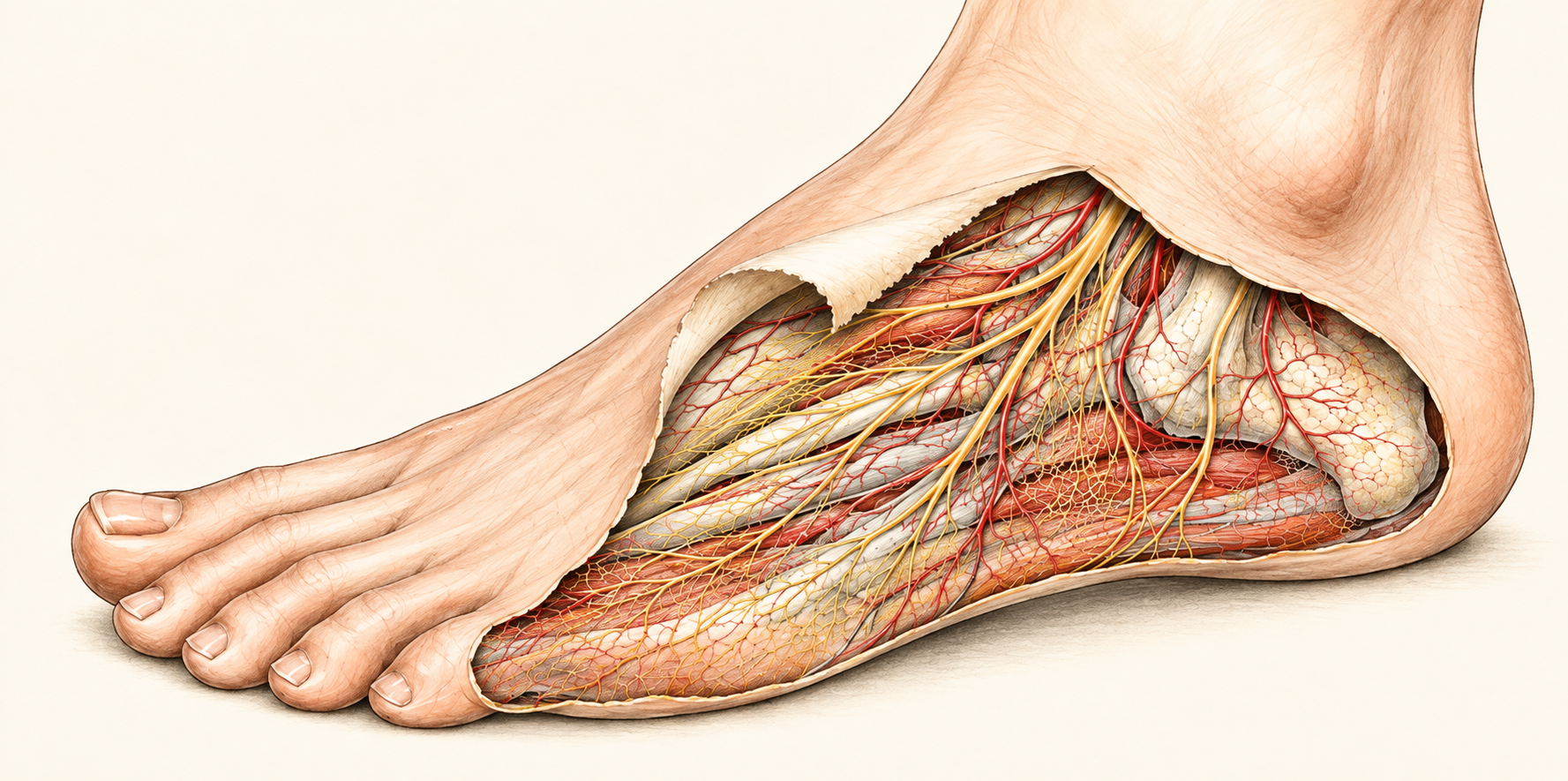
The feet reveal diabetic damage early because they contain some of the longest peripheral nerves and smallest blood vessels in the body, and both are particularly vulnerable to sustained high blood sugar. The peripheral nerves that supply the feet are the longest in the peripheral nervous system, branching from the lumbar and sacral spinal roots and travelling down through the leg to reach the toes. The feet also contain some of the smallest capillaries in your circulatory system.
Sustained high blood glucose damages both. The longest peripheral nerves lose function from their most distant endings first, which is why patients typically notice symptoms in the toes before the calves or thighs. This pattern is called length-dependent neuropathy. Small blood vessels become stiff and narrowed, reducing the supply of oxygen and nutrients to the tissue furthest from the heart, which again is the foot.
The result is that your feet often receive less blood, less sensation, and less ability to heal, all at the same time. Combined with the mechanical stress of daily walking, this makes the foot particularly vulnerable, even as diabetes is simultaneously affecting your kidneys, eyes, cardiovascular system, and other organs.
The three nerves diabetes damages
Diabetes damages three different types of nerves in your foot, and each one produces a distinct kind of problem. Most patients only know about one of them.
Sensory nerves: the alarm system
Sensory nerves are the nerves that tell your brain what your foot is feeling. Pressure, temperature, pain, vibration, the prick of a stone in your shoe. When sustained high glucose damages these nerves, the brain stops receiving those signals reliably. The foot may still be under stress or injury, but the brain does not know.
This is why diabetic patients can step on a sharp object and continue walking, develop a blister inside a shoe and not feel it, or burn their feet on a hot floor and discover the injury only when they look down. The loss of protective sensation is the danger, not pain itself.
Motor nerves: the architects of foot shape
Motor nerves control the small muscles inside your foot, the muscles that hold your toes straight and support the natural arch of the sole. When diabetes damages these nerves, those muscles begin to weaken and waste over time.
Gradually, the toes may start to curl into a hammer or claw shape. The arch can flatten. Pressure points shift from where they used to be to new locations the skin is not prepared for. Calluses form in unusual places. The foot literally changes shape while the patient continues to wear the same shoes that no longer fit the new geometry.
Autonomic nerves: the silent climate controllers
Autonomic nerves control the things your foot does without your conscious instruction. They signal your sweat glands when to release moisture. They regulate your tiny skin blood vessels. They influence the temperature, moisture, and oil balance of the skin.
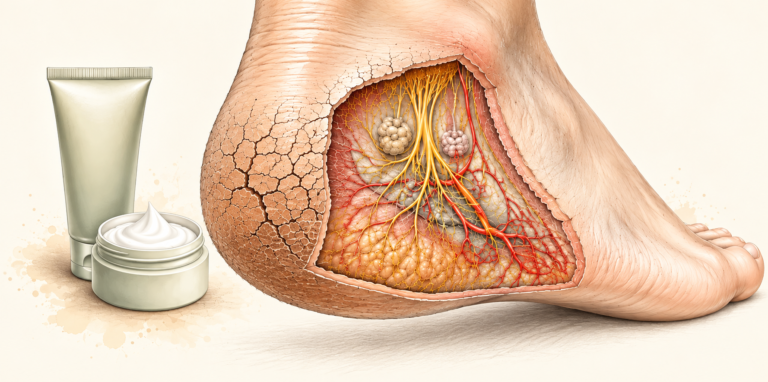
When diabetes damages these nerves, the sweat glands in your foot stop working properly. The foot becomes chronically dry. The skin loses its natural elasticity. Cracks appear on the heels and between the toes. Each crack is a potential entry point for bacteria and fungus.
In clinical practice
Most diabetic foot patients have a combination of all three forms of nerve damage by the time they consult a podiatrist. The first one usually goes unnoticed. The second changes the foot’s shape. The third opens the door to infection. Together, they explain most diabetic foot complications you have heard of.
What happens to your blood vessels
Nerve damage is only part of the story. Diabetes also damages the blood vessels that supply your feet, in two distinct ways.
The first is called microvascular disease. The smallest capillaries, the ones that feed individual skin cells, undergo structural changes including thickening of the basement membrane. Even when blood reaches the foot, it cannot perfuse the tissue properly at the cellular level.
The second is called macrovascular disease. The larger arteries in your legs become narrowed and stiffened by atherosclerotic plaque, the same process that causes heart disease. Less blood reaches your foot with every heartbeat.
This is why diabetic wounds heal so slowly. A scratch that would heal in a week on a healthy foot can take considerably longer on a diabetic foot, and that is assuming it does not get infected first.
Your immune system is also compromised
There is a third layer of damage many patients are not told about. Sustained high blood sugar impairs the function of white blood cells, the cells responsible for fighting bacterial infection. The exact same wound, on the exact same skin, may become infected more easily and more severely on a diabetic foot than on a healthy one.
This is why a small fungal infection between the toes, the kind a non diabetic person might ignore for weeks, can progress to cellulitis relatively quickly on a diabetic foot. The body’s first defenders show up late and underpowered.
The combination effect
Now combine these four problems into one foot. The patient may not feel injuries because the sensory nerves are damaged. The foot may have changed shape, so the shoes no longer fit correctly and pressure points develop. The skin is dry and cracking because the autonomic nerves are damaged. Blood flow is reduced, so any wound heals slowly. And the immune system is weaker, so any wound that forms is more likely to be invaded by bacteria.
This is why diabetic foot complications can develop quickly once they start. It is not a single failure. It is four failures stacking on top of one another, in a part of the body that walks several thousand steps a day.
Get screened, even if you feel fine
A diabetic foot screening at FootSecure can detect all three forms of nerve damage and early blood vessel changes long before you would feel any symptom. If you have had diabetes for more than five years and have not had a podiatry assessment, this is a valuable step in your overall diabetes management.
For further information, contact FootSecure Malleswaram on 8282825510.
How early can foot damage begin?
This is one of the more uncomfortable facts in diabetic foot medicine. Nerve damage can begin before a person is even officially diagnosed with diabetes. In fact, even pre-diabetics, those with elevated blood sugar levels that have not yet reached the diagnostic threshold for diabetes, can be affected by early neuropathy and vasculopathy. Many patients with type 2 diabetes have had elevated blood sugar for several years before their condition is detected, and the nerves and blood vessels do not wait for a diagnosis to start being affected.
Studies from India have shown that the prevalence of diabetic peripheral neuropathy among type 2 diabetics is significant, and clinical observations suggest that meaningful nerve and vascular changes have often occurred before diagnosis in many Indian patients. In other words, by the time many Indian patients learn they are diabetic, the foot may already be affected.
This is why both pre-diabetics and newly diagnosed diabetics should not delay foot screening, even in the absence of symptoms.
Warning signs your nerves have started to give
Most patients miss the early signs because they expect nerve damage to feel like an obvious neurological problem. It does not. Altered sensation in diabetes can present in many different ways, and the list below covers the most common presentations but is not exhaustive. Nerve damage can show up in multiple other symptoms too, which is why any unusual sensation in the feet deserves clinical attention.
- A vague tingling or pins and needles in the toes, especially at night
- A burning sensation in the soles that comes and goes without a clear trigger
- Numbness in patches, often described as walking on cotton or sponge
- Increased sensitivity, where bedsheets or socks feel uncomfortable on the skin
- Feet that feel cold to you but feel warm to someone else touching them
- Cramping in the calves or feet during walking, which improves with rest
- Cracked skin on the feet and lower limbs, or skin that flakes between toes
- A new shape to the foot, such as toes curling, the arch flattening, or shoes wearing out unevenly
Any one of these symptoms in a diabetic patient is reason for a podiatry consultation. The presence of two or more warrants prompt clinical assessment.
Why early action matters more than treatment later
Diabetic foot complications tend to follow a progressive pattern. In the early stages, when nerve damage is mild and there are no skin or bone changes, the prognosis is generally good. Regular screening, blood sugar control, and appropriate footwear can help keep the foot stable for many years.
Once a foot ulcer develops, the clinical picture becomes more serious. Diabetic foot ulcers are associated with significant morbidity, and long-term studies have shown that patients who develop foot ulcers have elevated mortality rates compared to diabetics without ulcers. A proportion of diabetic foot ulcers, particularly those that are complicated by infection, poor circulation, or delayed treatment, may ultimately lead to amputation. However, with prompt clinical care, appropriate wound management, and control of underlying factors, many ulcers heal successfully.
The key point is that most of this trajectory is influenced by how early the foot is examined and how consistently it is cared for. Prevention requires the foot to be examined before it becomes a problem, not after.

Book a diabetic foot screening at FootSecure
FootSecure is led by Dr. Sanjay Sharma, one of Bangalore’s leading specialists in diabetic foot care, at RxDx Whitefield and RxDx Malleswaram. A complete diabetic foot screening includes sensory testing with monofilament and biothesiometer, vascular assessment, structural examination, and a personalised foot care plan.
For further information, contact FootSecure Malleswaram on 8282825510.
Website: www.footsecure.com
The feet are particularly vulnerable in diabetes because they contain some of the longest peripheral nerves and smallest blood vessels in the body, both of which are damaged by sustained high blood sugar. Diabetes affects multiple organ systems from early in the disease, but the feet often show detectable signs early because of this anatomical vulnerability combined with the mechanical stress of daily walking.
Foot nerve damage can begin before a person is even diagnosed with diabetes, because most type 2 diabetics have had elevated blood sugar for several years before detection. Screening is recommended at the time of diagnosis, not after symptoms appear.
The earliest sign is usually altered sensation in the toes, which can include tingling, burning, numbness, or unusual sensitivity, often noticed at night. Many patients also experience unexplained dryness or cracking of the heel skin, which is a sign that the autonomic nerves controlling sweat glands have started to fail.
Early diabetic neuropathy can be slowed with strict blood sugar control, appropriate nutrition, and lifestyle changes. Nutrition plays a key role in nerve health and disease progression, alongside glycaemic management. Once nerve fibres are significantly damaged, full recovery is limited, but progression can often be halted. This is why early screening and comprehensive lifestyle intervention are critical.
A diabetic should have a complete podiatry assessment at least once a year, regardless of symptoms. Patients with any neuropathy, vascular disease, or prior foot ulcer should be assessed more frequently, typically every three to six months.
No, but the risk is significant. The International Diabetes Federation estimates that around half of all diabetics will develop some form of peripheral nerve damage. With good blood sugar control and proper foot care, many diabetics never develop ulcers or serious complications.